India vs New Zealand Match Scorecard
India vs New Zealand Match Scorecard: Top 10 Epic Highlights, Key Moments & Detailed Match Analysis Guide
Cricket fans around the world always look forward to clashes between the India National Cricket Team and the New Zealand National Cricket Team. These two teams share a history of competitive matches filled with thrilling moments, unexpected twists, and outstanding individual performances. Whether it’s a World Cup encounter or a bilateral series, every match between India and New Zealand brings excitement and high-quality cricket.
Table of Contents
Match Overview
An India vs New Zealand match often starts with a crucial toss decision. Conditions play a major role, especially in places like New Zealand where swing bowling dominates, or in India where spin becomes a key factor. The team winning the toss usually chooses based on pitch conditions—either to set a target or chase under lights.
Let’s consider a classic ODI-style scorecard scenario:
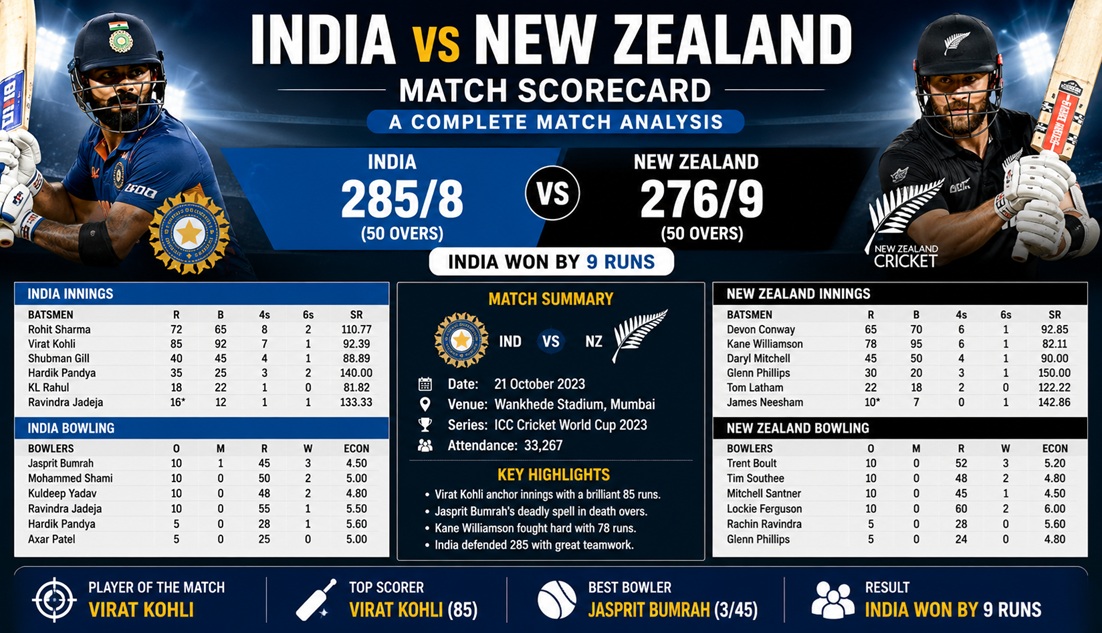
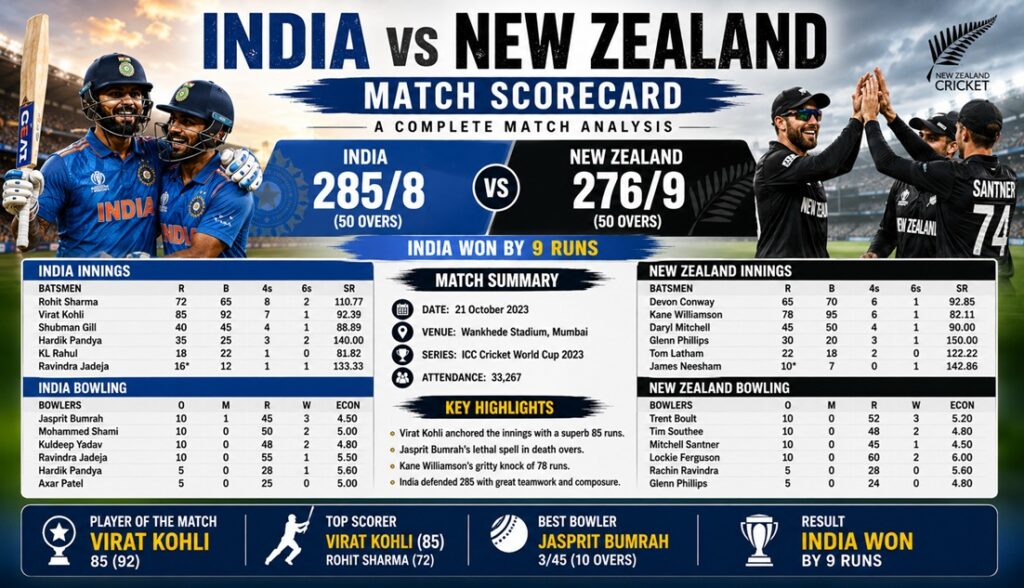
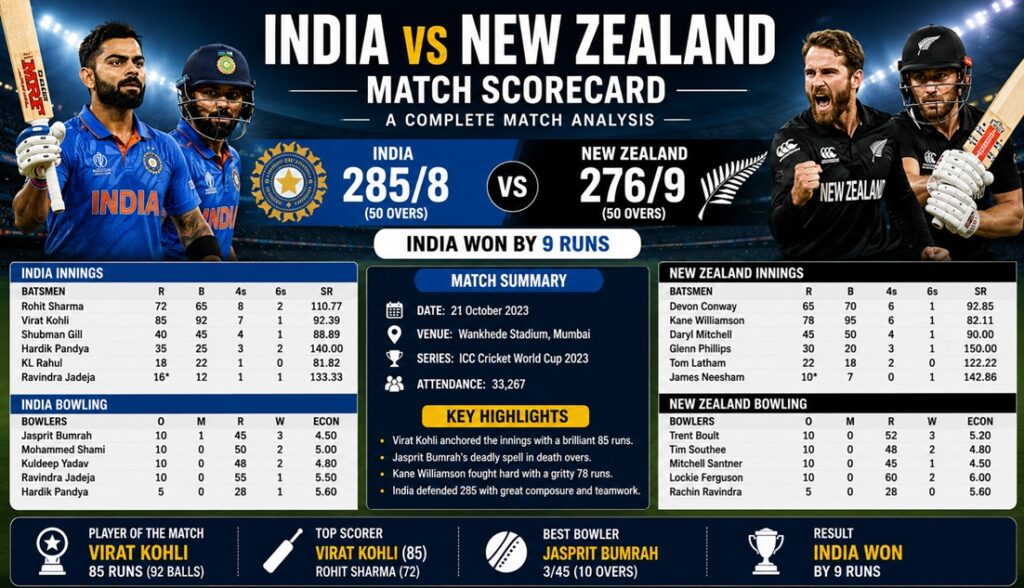
- India: 285/8 (50 overs)
- New Zealand: 276/9 (50 overs)
- Result: India won by 9 runs
This kind of closely fought match is a hallmark of contests between these two sides.
India’s Batting Performance
India’s innings usually revolves around strong top-order contributions. Players like Rohit Sharma and Virat Kohli often provide a solid start. In many matches, Rohit plays an aggressive role during the powerplay, while Kohli anchors the innings with his consistency.
A typical scorecard might look like:
- Rohit Sharma – 72 (65 balls)
- Virat Kohli – 85 (92 balls)
- Shubman Gill – 40 (45 balls)
- Hardik Pandya – 35 (25 balls)
India’s middle order plays a crucial role in accelerating the run rate. Players like Hardik Pandya bring balance with both bat and ball, while finishers ensure a strong total in the last 10 overs.
The final score of around 280–300 is considered competitive against New Zealand, given their disciplined bowling attack.
New Zealand’s Bowling Highlights
The strength of New Zealand lies in its well-balanced bowling unit. Bowlers like Trent Boult and Tim Southee are known for their swing and accuracy, especially in the early overs.
Typical bowling figures might include:
- Trent Boult – 3/52
- Tim Southee – 2/48
- Mitchell Santner – 1/45
- Lockie Ferguson – 2/60
Boult often provides early breakthroughs, while Ferguson adds pace and aggression in the middle overs. Santner’s spin plays a key role in controlling runs.
Despite their efforts, India’s strong batting lineup usually manages to put up a challenging total.
New Zealand’s Run Chase
New Zealand is known for its calm and composed approach during run chases. Players like Kane Williamson and Devon Conway are crucial in building partnerships.
A typical chase scorecard could be:
- Devon Conway – 65 (70 balls)
- Kane Williamson – 78 (95 balls)
- Daryl Mitchell – 45 (50 balls)
- Glenn Phillips – 30 (20 balls)
New Zealand often builds their innings steadily, keeping wickets in hand for the final overs. However, the pressure of a rising required run rate sometimes leads to crucial dismissals.
India’s Bowling Impact
India’s bowling attack has evolved significantly over the years. With a mix of pace and spin, they are capable of defending totals effectively.
Key bowlers often include:
- Jasprit Bumrah – Known for his deadly yorkers
- Mohammed Shami – Effective with seam movement
- Kuldeep Yadav – A wicket-taking spinner
Sample figures:
- Jasprit Bumrah – 3/45
- Mohammed Shami – 2/50
- Kuldeep Yadav – 2/48
Bumrah’s performance in the death overs is often the deciding factor. His ability to bowl under pressure makes him one of the best in the world.
Key Turning Points
Every India vs New Zealand match has defining moments that shape the result. Some common turning points include:
- Early wickets: If India loses quick wickets, it puts pressure on the middle order.
- Middle-order partnerships: A solid partnership often stabilizes the innings.
- Death overs: The last 10 overs in both innings are crucial for scoring and restricting runs.
- Fielding efforts: New Zealand is known for exceptional fielding, which can change the game instantly.
In our example, the match turned when Bumrah dismissed Williamson in the 45th over, shifting momentum toward India.
Player of the Match
In close encounters, the Player of the Match award usually goes to a player who performs under pressure.
In this case:
Virat Kohli (85 runs) for anchoring India’s innings and building a match-winning total.
Alternatively, a bowler like Bumrah could also win the award for defending runs in the final overs.
Why India vs New Zealand Matches Are Special
Matches between these two teams are not just about statistics—they reflect contrasting styles of cricket.
- India relies on star power and aggressive batting
- New Zealand focuses on teamwork and discipline
This balance makes their encounters unpredictable and exciting.
Moreover, both teams have faced each other in crucial ICC tournaments, adding emotional value and intensity to their rivalry.
Final Thoughts
The India National Cricket Team vs New Zealand National Cricket Team match scorecard is more than just numbers—it tells a story of strategy, skill, and resilience. From powerful batting displays to match-winning bowling spells, every element contributes to a thrilling contest.
Whether you are a die-hard cricket fan or a casual viewer, analyzing the scorecard helps you understand the game on a deeper level. It highlights not just who won, but how the match unfolded ball by ball.
As future encounters between India and New Zealand continue, fans can expect more nail-biting finishes and unforgettable performances. One thing is certain—whenever these two teams meet, cricket wins.
About the Author