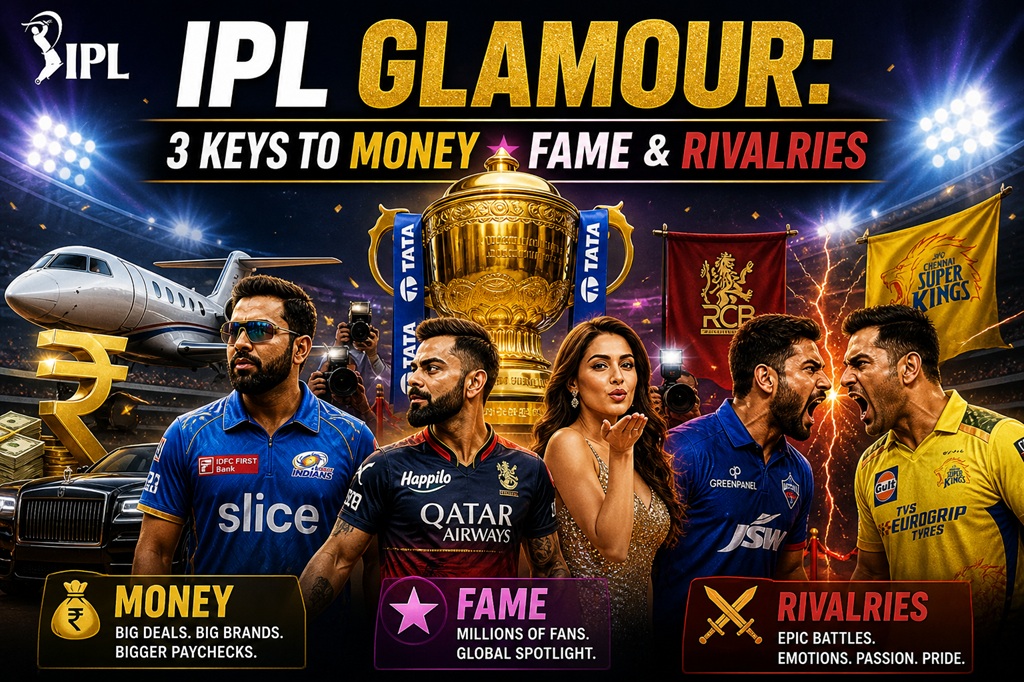
IPL Glamour: 3 Keys to Money Fame & Rivalries
IPL Glamour: 3 Keys to Money Fame & Rivalries
The Indian Premier League is not just a cricket tournament; it is a global entertainment spectacle that blends sport, business, celebrity culture, and intense competition into one powerful package. Since its launch in 2008, the IPL has transformed cricket into a high-voltage league where every match is a mix of drama, strategy, and star power. What makes it truly fascinating is the combination of massive money flow, worldwide fame, and fierce rivalries that keep fans glued to their screens season after season.
At its core, the IPL represents modern cricket’s evolution. It is no longer just about runs and wickets; it is about branding, entertainment value, and global reach. Players from different countries come together, not as opponents in international jerseys, but as teammates representing franchises owned by business tycoons, film stars, and corporate giants. This unique structure has created a league where cricket meets show business on a grand scale.
Table of Contents
The Power of Money in IPL
One of the biggest attractions of the IPL is the extraordinary amount of money involved. From player auctions to broadcasting rights, the league operates on a financial scale that few other cricket tournaments can match. Every year, franchises spend millions of dollars to secure top players. The auction itself feels like a high-stakes battlefield where cricketers are valued like elite assets.
For players, the IPL has become a life-changing opportunity. Even young or relatively unknown domestic players can suddenly become millionaires if a franchise sees potential in them. Overseas players also benefit, often earning more in two months of IPL than in an entire year of international cricket.
The revenue comes not just from team investments but also from massive sponsorship deals, television rights, and digital streaming platforms. Brands compete fiercely to associate themselves with IPL teams and players, knowing the league guarantees global visibility. Stadium advertisements, jersey sponsorships, and digital promotions all contribute to an ecosystem where cricket becomes a business empire.
The Rise of Fame and Stardom
The IPL is not just about money—it is also a factory of fame. Players become overnight celebrities, especially those who perform under pressure in high-profile matches. A single match-winning innings or a game-changing bowling spell can turn a player into a household name.
Social media has amplified this fame even further. Fans follow players not only for their on-field performance but also for their lifestyle, fashion, and personal stories. Cricketers now enjoy celebrity status similar to Bollywood stars, often appearing in advertisements, talk shows, and brand campaigns.
Franchise owners, too, are part of this fame ecosystem. Many teams are owned by famous personalities from the film industry and business world, which adds another layer of glamour to the league. The opening ceremonies, entertainment performances, and celebrity appearances make the IPL feel like a festival rather than just a sports event.
For young cricketers, IPL fame can be life-changing. A standout season can lead to national team selection, international contracts, and global recognition. The league acts as a launchpad for talent, giving players a platform that was unimaginable in earlier eras of cricket.
Fierce Rivalries That Define the League
While money and fame are important, the soul of the IPL lies in its fierce rivalries. Every season brings intense matchups that fans eagerly anticipate. These rivalries are not just between teams but also between fan bases, cities, and cricketing philosophies.
Classic rivalries such as Mumbai vs Chennai or Bangalore vs Kolkata are more than just games—they are emotional battles. Fans passionately support their teams, turning stadiums into roaring arenas of energy and excitement. Every boundary, wicket, and catch is celebrated or mourned with equal intensity.
What makes these rivalries even more dramatic is the presence of world-class players on both sides. Legends of international cricket often face each other in high-pressure situations, adding extra tension to every match. The unpredictability of T20 cricket ensures that no team is ever completely safe, making rivalries even more thrilling.
These matches often go down to the last over, with results changing in seconds. The pressure of performing in front of millions of viewers adds to the intensity, making every encounter unforgettable.
The Business Behind the Glamour
Beyond the glamour and excitement, the IPL is a highly structured business model. Franchise valuations continue to rise each year, making teams valuable long-term investments. Media rights deals alone are worth billions, proving the league’s global appeal.
The IPL has also revolutionized sports marketing in India. It has created new job opportunities in sports management, analytics, commentary, content creation, and event organization. Entire industries have grown around the league, showing its economic influence beyond cricket.
Moreover, the league has changed how cricket is consumed. Fans no longer wait for long formats; they enjoy quick, action-packed matches that deliver entertainment in just a few hours. This shift has made cricket more accessible and commercially successful than ever before.
The Emotional Connection with Fans
Despite its commercial success, the IPL remains deeply emotional for fans. Every team represents a city or region, creating a sense of identity and pride. Fans celebrate victories like personal achievements and feel defeats deeply.
The connection between players and fans is also stronger than ever. Stadium chants, online fan wars, and social media engagement create a constant dialogue between teams and supporters. This emotional bond is what keeps the IPL alive beyond just numbers and statistics.
Conclusion
The IPL is more than a cricket league—it is a global phenomenon where money, fame, and fierce rivalries come together to create unmatched entertainment. It has redefined cricket by turning it into a fast-paced, high-stakes spectacle that appeals to audiences worldwide.
From million-dollar auctions to last-ball thrillers, from rising stars to legendary rivalries, the IPL continues to shape modern cricket in powerful ways. Its glamour may shine on the surface, but at its heart lies pure competition and passion for the game.
About the Author